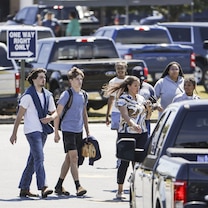
Watching the horror of people struggling to survive Hurricane Katrina and the aftermath has many wondering how to best cope with a natural disaster.
Elisabeth Leamy addressed these concerns as part of the town meeting:
Question: "What does anyone really know about evacuation, rescue procedures in their own city? … What if this had happened to New York? L.A.? Houston?"
Carolyn Burrell
Friendswood, Texas
Leamy: You have to have your own disaster plan. Choose two meeting points with your family, and make a list of out-of-state contacts.
Question: "If this were to happen in New York … what should we be keeping in our homes to sustain ourselves?"
Eileen K.
New York
Leamy: If this happens anywhere, you need the following essentials:
Water: Experts recommend packing one gallon of water per person per day for three days. It doesn't have to be expensive bottled water -- you can use clean empty two-liter bottles or other containers to store it. Plan on changing out your water supply every six months.
Food: Pack foods that require no refrigeration or heating, such as canned tuna and baked beans, crackers, etc. Don't forget the manual can opener. If you have a baby, remember baby food or formula. If you have a dog or cat, remember pet food. The Red Cross also says it's important to provide comfort foods that will cheer your family in the midst of disaster.
Tools: Pack flashlights, radios and a whistle to call for help. Also, remember car keys and a pencil and paper. You'll need large Ziploc-style bags to keep your paper and other things dry and maps to help you get to your family meeting place. Blankets and sleeping bags are also useful.
Question: "If I rely on medication for daily survival, how would I get that?"
Melissa Allen.
Leamy: The Red Cross recommends you should have a first aid kit in your house and each of your cars. Also, pack cleansing supplies such as hand sanitizer, antiseptic wipes and soap. Bring three basic over-the-counter medicines: a pain reliever, an anti-diarrhea medicine and something for upset stomach. Plus, pack a supply of any prescription medicines people in your family need to survive.
You should also bring glasses or contact lenses, and for those who wear dentures, supplies so you can eat. Feminine supplies, diapers, toilet paper and garbage bags will also be useful.
Question: How do people who need to rebuild know whether or not to trust a contractor?
Leamy: Three things: If your state requires a contractor be licensed, make sure yours is. Check the contractor's reputation. Don't pay too much up front.
Question: How do I protect my dog if I'm in a natural disaster?
Leamy: Have a plan ahead of time -- someone out of state who is willing to take in you and your dog. If authorities say evacuate, do it right away so you don't end up in an evacuation shelter that doesn't take pets.