Feb 7, 2012 5:42pm

A Guide to Decoding Ingredients on Grain Products
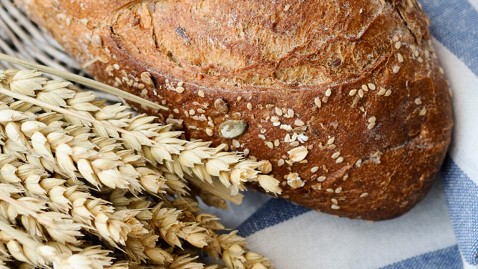
gty whole grain  bread wheat thg 120207 wblog A Guide to Decoding Ingredients on Grain Products

Image Credit: Getty Images

Claims on the front of packages such as “whole grain,” “multigrain” and “12-grain” have been given no legal definition given by the Food and Drug Administration. That means manufacturers are fairly free to use them as bragging points, even if their products contain  more refined white flour than whole grain.

That’s why consoumers need to go to the back of the package and look at the list of ingredients, which are listed in order — from most to least — of what’s in the product.  If you want more whole grains in your diet, make sure the first ingredient in the foods you eat is a whole grain.

Simple, right?  Actually, no.  For example “wheat flour” means “white flour.”  What?  Yep, only whole  wheat flour means … whole wheat flour.  So below is a glossary of terms to help  you decode ingredient lists and add more whole grains to your diet.

Terms that mean “whole grain”: Whole wheat: If you see the term “whole wheat,” that is the only time you are getting whole grain wheat flour.  It includes all parts of the grain, including the germ, the endosperm and the bran.

100 Percent  Whole Wheat: A more emphatic description of the above.

Whole Wheat Bread: This is the only whole grain product that must be made with 100 percent  whole wheat flour to be labeled “Whole Wheat bread.”

100 Percent  Whole Wheat Bread: Ditto

Wheat bran: A natural source of fiber.

Oat bran: Another natural source of fiber.

Terms that do not mean whole grain:

Wheat flour: This is refined white flour.  White flour is missing the germ and the bran.

Enriched white flour: This is refined white flour, with some nutrients added back in.

Unbleached white flour: This is refined white flour.

Bleached wheat flour: White flour.

Wheat bread: Because it’s not called “Whole wheat,” just “wheat, this is almost certainly white bread, with little or no whole grain flour.

Whole grain: Seeing “Whole grain” on food labels doesn’t necessarily mean that the product is mostly whole grain; it may be mostly white flour.

“Made with  whole grains: Often these products contain even less whole grain.  Check the ingredients list to see if whole wheat flour or another whole grain is the first grain listed in the ingredients list.

Multigrain: This means the food contains more than one type of grain, but it  may be all be refined flour, which are not as beneficial to your health.  None may be whole grain.

Stoneground: Stoneground has no legal definition, so it’s basically meaningless.

High in Fiber: Many manufacturers add synthetic  fiber to their products, or fiber from other sources, so check for ingredients like “maltodextrin” and “inulin,” also known as  chicory root fiber,  oat hull fiber, oat fiber, wheat fiber  and wheat starch.

SHOWS:

User Comments

Thanks for the waste of my time. There was nothing in this story that I did not already know.

Posted by: Maude kravits | February 7, 2012 February 7, 2012, 6:51 pm

old news. the story in whole grains and multi grain was old, old ,old. FOX news covered this years ago and did so with more information. ABC let me down again….and that is old news as well.

Posted by: wayne | February 7, 2012 February 7, 2012, 6:55 pm

This evenings news–whole grain and salt–what about the artificial sweeteners–I couldn’t believe the GNC multi I purchased had suculose on them–to make them more palatable and they aren’t even chewable–these artifial sweeteners mess up your insulin–no wonder we have more type 2 diabeties.

Posted by: Carol VandeBerg | February 7, 2012 February 7, 2012, 7:01 pm

To me it is astonishing that the FDA will not rectify this problem of correct labeling. This has been going on since 1993. My guess is the great AgraBusiness has the FDA all wrapped up in their bed
covers. Maybe we need to come together on Facebook or Twitter and give the FDA a talking to.
David did it for the Made In America push now who wants to step up to the plate and do it for the
Moms and the Kids of America. We Are What We Eat! Thanks for listening.

Posted by: Pat Siemer | February 7, 2012 February 7, 2012, 7:06 pm

This information always need to be repeated. Many people have never read nor heard the difference. Forget the sarcastic, shallow and other stupid replys.

Posted by: nate | February 7, 2012 February 7, 2012, 7:20 pm

Couldn’t have said it any better Nate ! Completely AGREE.

Posted by: Joe | February 7, 2012 February 7, 2012, 7:36 pm

Thanks, ABC, for informing the public in simple terms that everybody, including me, can understand. “Whole wheat” is the key phrase here, then.

Posted by: Ngoo Nam | February 7, 2012 February 7, 2012, 7:58 pm

Exactly Nate I have heard about it but a long time ago, some people need their minds refreshed I for one have a friend that is convinced just because he’s a trainer he knows his healthy stuff and fixated that just because it says whole grain its healthy and i just told him about this story and he still doesn’t believe it he just says bs so I am going to post this story on his profile

Posted by: Andy | February 7, 2012 February 7, 2012, 8:00 pm

We need a Flour Czar!

Posted by: newcountryman | February 7, 2012 February 7, 2012, 8:49 pm

Why is “inulin,” also known as chicory root fiber, oat hull fiber, oat fiber, and wheat fiber considered “synthetic”??????

Also, why are maltodextrin and wheat starch listed under synthetic fiber when they are sugars?

Posted by: mmazzi | February 7, 2012 February 7, 2012, 10:09 pm

Recorded program hoping for expose on genetically altered wheat which is the underlying cause of so many of our health problems in this country. ABC won’t ever investigate this and most will consider it some fanatical hype. However, within 2 years the social networks will reveal the fraud taking place with the wheat/whole grain lobby.

Posted by: oldjounalist | February 7, 2012 February 7, 2012, 10:22 pm

We consume far too much grain to begin with for all of it converts to sugar and if consumed at the wrong time of the day elevates one’s glucose levels. Fiber? Is that the mantra? Give me a break. The bacteria and fungus in ‘whole grains’ is what has added fuel to our already overweight society while adding toxins to our body. Thanks FDA.

Posted by: stephen | February 8, 2012 February 8, 2012, 7:22 am

Leave a Reply

Do you have more information about this topic? If so, please click here to contact the editors of ABC News.