Cancer Drug Erases Alzheimer's in Mice
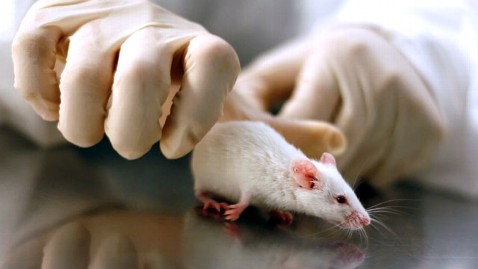
Cancer drug bexarotene quickly fought Alzheimer's in the brains of mice.
A drug typically used to treat skin cancer quickly reversed Alzheimer's disease in mice, according to a study published today in the journal Science. Alzheimer's researchers call the results exciting, but they remain cautious about the drug's ability to fight the disease in humans.
Researchers at Case Western Reserve University gave the drug to mice that had brain hallmarks of Alzheimer's disease: abnormal protein plaques and tangles, which destroy the brain's centers for memory and cognitive function.
Within hours of taking the drug, the plaques began to clear out of the mice's brains. After three days on the drug, more than 50 percent of the Alzheimer's plaques had disappeared, and the mice regained some of the cognitive and memory functions typically lost by the disease's march through the brain.
"We were absolutely astounded and thrilled," said Paige Cramer, the study's lead author and a doctoral candidate at Case Western Reserve University School of Medicine. "The research on treatments out there doesn't show such improvement with such speed."
The drug, bexarotene, is approved by the U.S. Food and Drug Administration for the treatment of skin cancer. Cramer said it helps the body increase its stores of a key protein, called ApoE, which helps clear Alzheimer's plaques from the brain.
"As a consequence of aging, the ability to clear plaque from the brain goes down, and we are able to enhance ApoE," Cramer said. "The benefit of this drug is we are just facilitating or enhancing Mother Nature."
But the drug must make the leap from success in mice to success in humans, which has foiled many other promising Alzheimer's drugs. Researchers say bexarotene has an advantage because it is already approved by the FDA for use in humans.
"It's still an animal study, and it still needs to be moved into humans. But it is exciting and is a novel approach," said Maria Carrillo, senior director of medical and scientific relations for the Alzheimer's Association.
A host of potential drugs for Alzheimer's disease have shown promise in early research, then failed to show any actual effectiveness against the disease upon further study. Most recently, in January, Pfizer and Medivation pulled the plug on clinical trials for dimebon, an antihistamine nasal spray that had shown some benefit for Alzheimer's patients. The companies said the clinical trials failed to show that the drug actually worked against the disease.
Dr. William Klunk, co-director of the Alzheimer's Disease Research Center at the University of Pittsburgh, said the current study on bexarotene opens an exciting new avenue for the potential successful treatment of the disease. But he remains cautiously optimistic.
"We in this field have seen enough success in mouse studies not pan out in human studies to know this is just the beginning and there's a long way to go," Klunk said.