Jan 18, 2012 4:37pm

Apple to Remake Textbooks; Project Begun by Steve Jobs
gty steve jobs ipad thg 120118 wblog Apple to Remake Textbooks; Project Begun by Steve Jobs

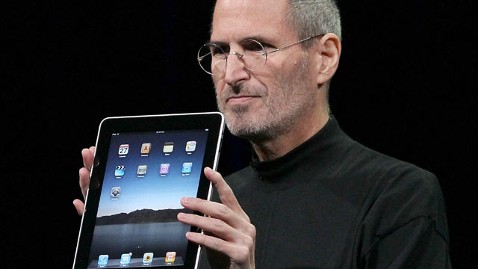
Steve Jobs introduces the iPad in San Francisco, Jan. 27, 2010. Justin Sullivan/Getty Images

Even in his last months, Steve Jobs, the Apple co-founder who had already masterminded the iPad and iPhone, reimagined digital music, animated films and done so much more in modern technology, said he had new projects on his mind.

On Thursday in New York, Apple is holding what it calls “an education announcement in the Big Apple.” Word on the street — well, not the street, but all over the digital world — is that the company has been working on one of Jobs’ pet projects: to reinvent the old-fashioned American school textbook.

Click Here for Coverage of Apple’s iBooks 2 Announcement

Gene Munster, the technology analyst who closely follows Apple for Piper Jaffray, said Apple will offer a series of software tools to make it possible to move education from textbooks to interactive digital lessons — easily prepared by publishers, teachers or others interested in creating learning materials.

“Instead of a textbook, we call it a ‘native digital learning experience,’” Munster said. “I know that’s a lot of words. People will call it a textbook, but it’s really not just an e-book or digital book.”

Jobs is cited by his biographer, Walter Isaacson, as saying textbooks were just waiting to be transformed. Not only were they dull and sometimes outdated, they were heavy (just ask any seventh-grader with a backpack full of them).

In “Steve Jobs,” Isaacson wrote, “His idea was to hire great textbook writers to create digital versions, and make them a feature of the iPad. In addition, he held meetings with the major publishers, such as Pearson Education, about partnering with Apple. ‘The process by which states certify textbooks is corrupt,’ he said. ‘But if we can make the textbooks free, and they come with the iPad, then they don’t have to be certified. The crappy economy at the state level will last for a decade, and we can give them an opportunity to circumvent that whole process and save money.’”

Jobs had apparently been thinking about the educational market for a long time. Munster pointed to an interview Jobs did in 1996 in which “he was very cynical about getting education on board with technology. I think the Isaacson book reflects his later thinking.”

(Walter Isaacson’s publisher, Simon & Schuster, said he was out of the country and could not be reached.)

Munster said Piper Jaffray surveyed 25 computer-system managers from schools teaching kindergarten to 12th grade. “The biggest reason iPads are not in schools is not a lack of content, but that school I.T. departments can’t manage hundreds of iPads,” he said. “They can’t control them the way they control computers.”

It’s not a matter of cost for schools, he said. Instead, they worry about students using school equipment to roam online instead of study. With Apple’s new tools, he said, teachers, publishers and others should be able to create new learning materials even if they’re not tech-savvy.

“A line being used is that ‘it’s the Garage Band of textbooks,” said Munster. (Garage Band is an app sold by Apple that helps one create music.)

Who is threatened if Apple succeeds? Publishers who don’t embrace the change, said Munster — as well as sellers of school backpacks, since students will have less to carry.

SHOWS:

User Comments

Ned,

I think you missed the point on who is threatened. It isn’t some all-pwerful backpack lobby, but the school board/publisher relationships that use the ghastly high prices of the textbooks to maintain power over what is taught in classrooms across the country.

Think evolution versus intelligent design or the fantasy we teach called U.S. History.

Posted by: Richard | January 18, 2012, 4:57 pm 4:57 pm

Personally I think that textbooks like this would be a wonderful addition
Textbooks are heavy (most averaging 3 to 5 pounds, times six or seven classes) and often times out dated. The use of iPads would help to eliminate both of these issues. As for roaming on the internet, this is often a problem, no matter in school or not. Most schools have a firewall and blocking software that prevents students from roaming all over the net. Students already do it on computers, so iPads would be no different.

Posted by: Cam | January 18, 2012, 6:29 pm 6:29 pm

This is b.s. Todays fat @$$ lazy kids need some form of exercise. They need to carry those 4-5 lb. books!

Posted by: Sharka | January 19, 2012, 8:04 am 8:04 am

I’m parent of 8th grade and I’m favor of IPAD or any type of electronic text book. My son’s schools does not even provide text book on many subjects. Schools are now keeping text books in school for share. Most of worksheets are given via online. I was growing up aboard and when I was 8th grade, I was taught to study preview, attend the class and review the subject/chapter. Without text books at home, how is our children preview and review the subjects? We kept hearing about state does not have enough school budgets, cutting teachers salary, not providing text books to student…etc. We need to fix this issue for coming generation of this country. I’M FOR IPAD TEXT BOOK OR ANY OTHER KIND OF ELECTRONIC TEXT BOOK.!

Posted by: David | January 19, 2012, 10:44 am 10:44 am

It is a wonderful idea, but it is not realistic. The process of creating a text might seem simple, but it is inconceivably complex. It involves much more than just writing, editing and publishing. There designers and graphic artists, along with fact checkers, technical experts, managers, and admistrators. Even with the layers of checking, editing and rechecking, errors still slip through. Information we thought was fact turns out to be incorrect. Quick…who paid for Christopher Columbus’ ships? I’ll bet your answer is wrong. Then when nearly everything is correct…it is wrong because somebody or something was included or excluded.
My point is that the textbook may be delivered in a new format, but it will still be the same textbook. It may be lighter, but it will not be any more interesting.

Posted by: Mark | January 19, 2012, 1:57 pm 1:57 pm

Freedom of choice: one can buy hard copy printed books or more convenient e-books, a bright Apple future and leading way toward the 21st century learning experience and having all the people around the world connected to learn when Apple will extend the textbook service in all foreign languages. Engage in going green by donating iPads including your old ones to organizations such as UNICEF because our e-trash is a real e-treasure for the needy kids in the developing countries: a new way to recycle to benefit the world !

Posted by: apple can do it | January 19, 2012, 3:49 pm 3:49 pm

The real question here, which no one else appears to be asking, is whether children will retain what they read from an ipad as well as they retain what they read from a book. Children aren’t widgets and there is a reason why the phrase “different strokes for different folks came into existence.

Posted by: whatever | January 20, 2012, 5:45 am 5:45 am

The traditional teaching methods are best. The teacher stands in front of the class and reads from a book. The students write it down as he reads it. Then they memorize it, and repeat it back to him. The teacher writes in the sand, and draws things in the sand, and only needs a tree branch to do so. The students can also draw in the sand. Let’s keep things traditional.

Posted by: Delmar H. Knudson, M.D. | January 21, 2012, 8:26 am 8:26 am

Leave a Reply

Do you have more information about this topic? If so, please click here to contact the editors of ABC News.